How Much Is My China Worth?
How much is my china worth? It depends on who made it, which pattern it is, how old it is and what shape it is in, and for most dinnerware the honest answer is less than people hope. A handful of makers and patterns still sell well, while ordinary sets often move for a fraction of their original price. This guide shows you how to tell which group your pieces fall into.
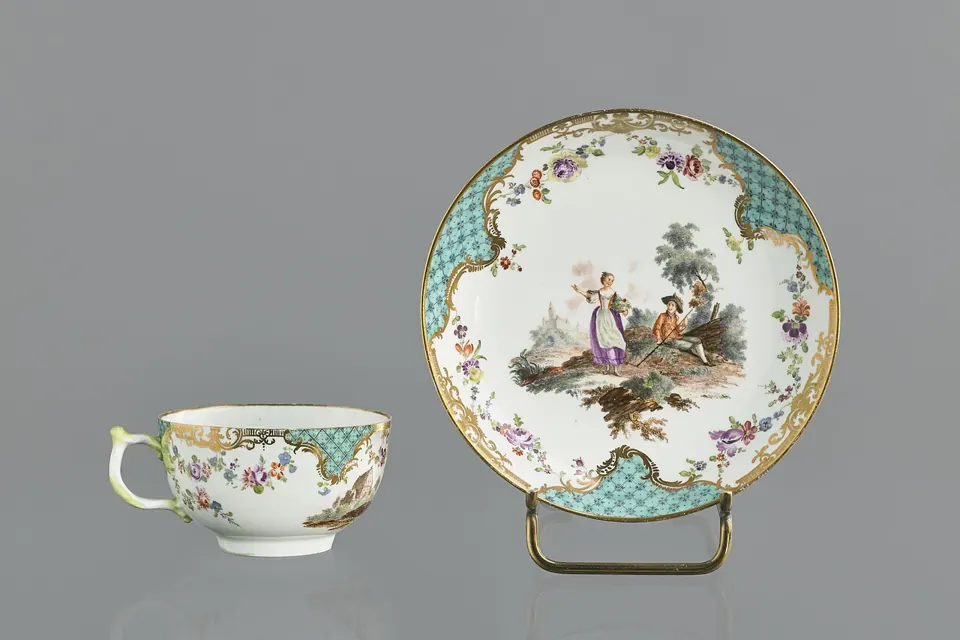
What drives the value of china and porcelain
Six things do most of the work:
- Maker. Names like Meissen, Royal Copenhagen, Herend, Haviland Limoges, Wedgwood, Royal Doulton, Spode and Lenox have steady followings. An unmarked plate starts at a disadvantage.
- Pattern. Within one maker, some patterns are wanted and others are not. Replacement buyers look for the exact pattern they already own, so a discontinued pattern with loyal owners can sell piece by piece.
- Age. Older is not automatically better. An 18th century piece from a good factory is a different market from a 1950s wedding set.
- Condition. Chips, hairline cracks, worn gold trim, faded decoration and dishwasher haze all cut the price, often sharply.
- Completeness. For figurines, missing fingers or flowers matter. For dinnerware, serving pieces (platters, covered vegetable dishes, gravy boats, teapots) usually sell better than extra dinner plates.
- Demand. Many households are downsizing at once and fewer younger buyers want formal dinnerware. That keeps prices for common sets low.
How to read the mark on the bottom
Turn the piece over in good light. The backstamp is the single most useful clue.
- A country name. Pieces imported into the US were required to show the country of origin after 1891, so a mark that reads "England" or "Germany" points to roughly that date or later. The longer wording "Made in England" generally shows up later still, mostly in the 20th century.
- Japanese marks. "Nippon" was used on Japanese exports until about 1921, when "Japan" replaced it. "Made in Occupied Japan" dates a piece to about 1945-1952.
- "Bone China" or "Fine Bone China." This wording is mostly 20th century. Bone china is thin, white and translucent; hold it up to a light and you should see the shadow of your fingers through it.
- Registration numbers. British pieces marked "Rd No." followed by a number carry a design registration, which can help narrow the date.
- Crossed swords. This is the Meissen mark, and it is one of the most copied marks in porcelain. Treat it as a reason to look closer, not as proof.
No mark at all? Look at the body. Translucent and thin suggests porcelain or bone china. Opaque, thicker and slightly porous at a chip suggests earthenware or stoneware, which is usually less valuable unless it comes from a known pottery.
Rough price bands
The bands below are rough asking-price bands you will commonly see on marketplaces for china in good condition. They are based on general market patterns for maker, pattern and condition, not on any single sale. Sold prices are usually lower than asking prices, so check sold listings for your exact maker and pattern before you decide.
| Type | Typical asking range |
|---|---|
| Common dinnerware, per piece | $2 to $15 |
| Common full dinner set (service for 8 to 12) | $50 to $300 |
| Better maker or wanted pattern, per piece | $10 to $60 |
| Serving pieces from a wanted pattern | $30 to $200 |
| Rare, early or in-demand porcelain and figurines | $100 to several thousand |
Expect wide spread inside each band. Two plates from the same maker can sit at opposite ends because of pattern and wear.
Upload a photo and get a likely identification and a value range.
Figurines are their own market
Figurines from Royal Doulton, Lladró, Hummel (Goebel), Meissen and Royal Copenhagen all have collector followings, but prices vary a lot by model. Check the base for a model number or name, the factory mark and any artist initials. Look closely at thin parts like fingers, flowers, lace and hat brims. Small repairs are common and can be hard to see; a repaired spot often looks slightly duller or a shade off in color.
Photo tips for a better estimate
Our estimator works from photos, so the photos decide how specific the answer can be.
- Take one clear shot of the front of the piece in daylight, with no flash glare.
- Take a sharp, close photo of the mark on the bottom. This matters more than any other photo.
- For a set, photograph one place setting plus any serving pieces, then note how many of each you have.
- Show damage honestly: chips, cracks, worn gold rims. Hiding it only makes the estimate less accurate.
- For figurines, shoot the front, back and base.
You can read how the estimate is put together on our how we estimate page.
When to get a professional appraisal
A photo estimate is a good first step, not a formal appraisal. Get a professional opinion when:
- You need a written value for insurance, an estate, a divorce or a donation.
- The mark points to an early or high-end factory and the piece looks old and hand-painted.
- You have a large collection of one maker and want to sell it as a group.
Look for a credentialed appraiser who belongs to a recognized appraisal society and works to the USPAP standard, and ask whether ceramics is part of their specialty. Many china owners also have silver and glass from the same household; see our guides to silverware and glass.
Questions people ask
Is my grandmother's china worth anything?
Often it is worth something, but rarely what it cost new. Common patterns sell slowly and for modest amounts. Well-known makers, discontinued patterns with loyal owners and serving pieces do better.
Is bone china more valuable than regular porcelain?
Not by itself. Bone china is a type of body, not a guarantee of value. Maker, pattern and condition matter far more than the material.
Does a "Made in England" mark mean my piece is old?
It usually means the piece was made in the 20th century or later. Older English pieces made before the import rules often carry no country name at all.
Should I sell a dinnerware set as a whole or piece by piece?
For common patterns, selling as one lot saves time. For wanted patterns, single pieces sold to people filling gaps in their own set often bring more in total, though it takes longer.
Does a small chip ruin the value?
For everyday dinnerware it drops the piece to the low end or makes it hard to sell. For rare porcelain a small chip lowers the price but does not erase it.