Baseball card value depends on who is on the card, which exact card it is, how scarce that version is and how well it has survived. Age alone does not make a card valuable. A shoebox from 1990 is usually worth less than one star rookie card from the same year in sharp condition. Here is how to tell which kind of box you have.
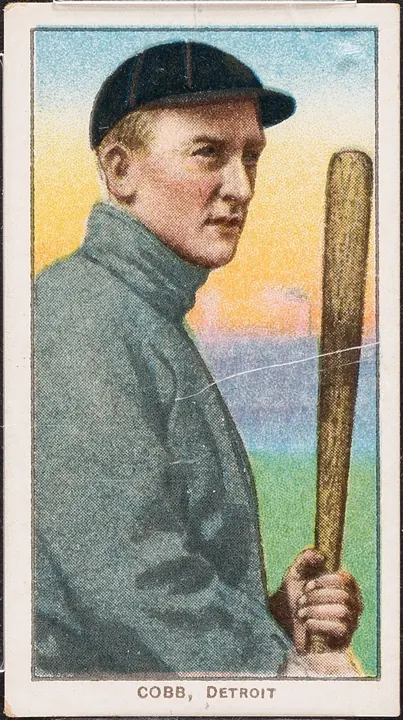
What drives baseball card value
- The player. Hall of Famers, all-time greats and current stars carry the demand.
- Rookie status. A player's rookie card (RC) is usually the most wanted card of their career.
- Era and print run. Vintage cards (before about 1980) survive in small numbers in good shape. Cards from 1987 to 1993 were printed in enormous quantities.
- Version. In modern cards, parallels, refractors, serial-numbered cards, autographs and relics can be worth many times the base card of the same player.
- Condition and grade. Corners, centering, edges and surface decide the grade, and the grade can change the price more than anything else.
How to read year, brand and card number
Flip the card over. The back usually shows the card number (often in a corner), the brand and a copyright line with the year. The stats on the back usually run through the season before the set year. The main brands you will see:
- Topps: the backbone of the hobby from the 1950s to today, including Topps Chrome and many modern product lines.
- Bowman: a vintage brand from the late 1940s and 1950s, revived in 1989. Modern Bowman is known for prospect cards, often labeled "1st Bowman", which are popular but are not the same as an official rookie card.
- Fleer and Donruss: joined Topps in 1981 and were major brands through the 1980s and 1990s.
- Upper Deck: debuted in 1989 with better card stock, photos and anti-counterfeit holograms.
Year, brand and card number together identify the card. "1989 Upper Deck #1" is a specific card; "a Griffey card" is not.
Rookie cards
Modern cards carry a small "RC" logo on rookie cards. On older cards, the rookie card is the player's first regular-issue card from a major brand, and collector checklists list them. Cards from traded or update sets in the 1980s are sometimes called XRC (extended rookie card) and usually sell below the main set rookie.
Modern parallels, refractors and hits
- Parallels: the same card design in a different color border or finish, often seeded less often than the base card.
- Refractors: chrome cards with a rainbow shine when tilted, common in Topps Chrome and Bowman Chrome.
- Serial numbering: a stamped number like 25/99 means only 99 copies exist. A 1/1 is a single copy.
- Autographs and relics: pack-pulled autographs and cards with a piece of jersey or bat. The manufacturer's guarantee is printed on the back.
Take a picture and check its value with the estimator at the top of this page.
The junk wax era and vintage cards
Cards from roughly 1987 to 1993 are known as the junk wax era. Companies printed them in huge numbers and many collectors saved them carefully, so supply is far larger than demand. Most cards from those years, including many rookie cards, sell for a few cents to a few dollars. The exceptions are the best rookies of the era in top condition, plus some error cards and scarce inserts.
Vintage cards, roughly pre-1980, are a different story. Fewer were saved, and survivors in sharp condition are scarce. Even well-worn cards of Hall of Famers from the 1950s and 1960s usually hold real value.
Price guidance
Two well-documented examples show how far apart cards can be:
- 1989 Upper Deck #1 Ken Griffey Jr. rookie, the best-known card of the junk wax era: about $96 ungraded, about $450 in grade 9 and about $5,850 in PSA 10 (SportsCardsPro, PriceCharting's sports card guide, November 2026). That spread, from under a hundred dollars to several thousand, is driven almost entirely by condition.
- 1952 Topps #311 Mickey Mantle, graded SGC 9.5, sold for $12.6 million at Heritage Auctions in August 2022 (Heritage Auctions archives, checked November 2026). Lower-grade copies sell for far less.
For everyday cards, think in words. Junk wax base cards and most modern base cards: cents to a few dollars. Rookies of current stars and modern numbered parallels: anywhere from a few dollars to hundreds, depending on the player and print run. Vintage Hall of Famers: often tens to thousands of dollars, depending on grade. Always check sold listings for your exact year, brand, number and condition. For how a photo becomes a range, see how we estimate.
Condition and grading: PSA, SGC and BGS
Graders check four things: centering (even borders front and back), corners (sharp, not rounded or frayed), edges (no chipping, especially on colored borders) and surface (no creases, scratches, print lines or stains). One crease can cut a card's value sharply.
- PSA grades 1 to 10 and is the largest grader for sports cards.
- SGC uses a 1 to 10 scale with half points and is well regarded for vintage cards.
- BGS (Beckett) uses half points and subgrades for centering, corners, edges and surface, and is common on modern cards.
Prices differ between graders at the same number, so compare like with like.
Reprints and trimmed cards
- Reprints: many famous cards were reissued. Reprints often say "reprint" on the back, use glossier stock or have the wrong size.
- Trimmed cards: someone cut the edges to make corners look sharp. Measure the card: a trimmed card is slightly smaller than the standard size for its year, and the edges can look too clean or uneven. Graders will not give a numeric grade to a card they judge altered.
Photo tips for a better estimate
- Shoot the front and back flat and square, filling most of the frame, so the copyright line and card number are readable.
- Remove the card from a cloudy sleeve or top loader if you can do it safely.
- Use soft daylight. Add one tilted shot to show creases and surface wear, and one close-up of a corner.
When to get professional grading or an appraisal
Grade a card when it is valuable raw, looks sharp under magnification, or needs authentication (vintage stars, autographs, high-end rookies). Check the sold prices at several grades first and make sure the fee still pays at a realistic grade. Have Pokémon cards too? See the Pokémon card value checker.
Questions people ask
How much is my baseball card worth?
Identify the year, brand, card number and player, then check condition. Most cards from the late 1980s and early 1990s are worth little; star rookies, vintage cards and scarce modern parallels are where the value is.
Are my 1980s and 1990s baseball cards worth anything?
Most sell for cents to a few dollars because so many were printed. Top rookies in excellent condition and some error cards are exceptions.
How do I know if a card is a rookie card?
Look for the "RC" logo on modern cards. For older cards, check a set checklist for the player's first regular-issue card from a major brand.
What does a number like 23/99 on my card mean?
It is a serial number. Only 99 copies of that version were made, and yours is copy 23. Lower print runs usually mean higher prices.
Is PSA, SGC or BGS better?
All three are widely accepted. PSA is the largest, SGC is popular for vintage, and BGS is common for modern cards. Compare sales at the same grade from the same company.